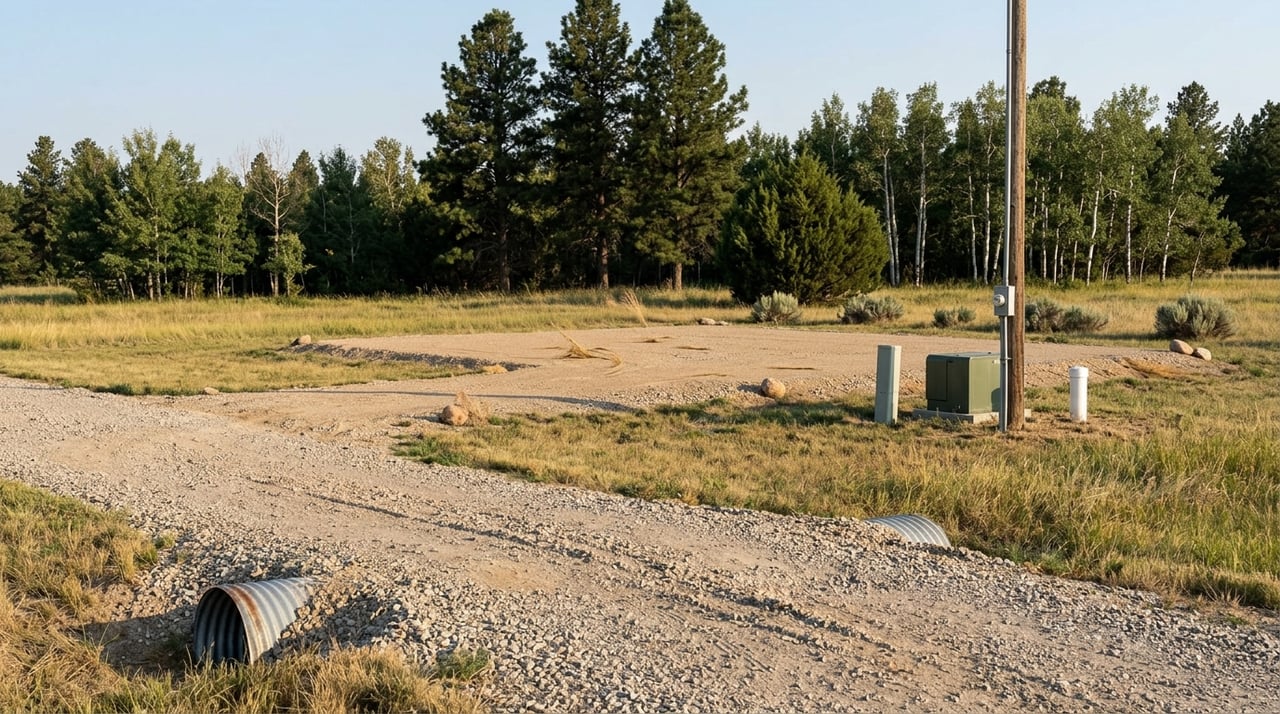
Buying land in Banner can look simple at first. You see open space, big views, and the kind of privacy that is hard to find closer to town. But with acreage in rural Sheridan County, the real question is not just whether you like the land. It is whether the land will work for what you want to do. This guide will help you think through access, utilities, buildability, and long-term use so you can make a smart, confident decision. Let’s dive in.
Why Banner land needs careful review
Banner is about 25 miles south of Sheridan, and the area sits within a large, lightly populated county. Sheridan County has more than 2,523 square miles of land, with an estimated 33,241 residents in 2025. County planning documents make it clear that this is an agricultural and rural county first.
That matters when you buy acreage. In Banner, you should approach land more like a rural feasibility project than a standard subdivision purchase. Price per acre matters, but so do road access, water, septic, slope, and the parcel’s long-term use.
County planning also supports keeping most urban-style growth in towns and in the City of Sheridan. Outside those areas, the focus stays on agriculture, resource uses, very low-density residential use, and clustered development where appropriate. That means every parcel can come with its own set of practical questions.
Start with access and legal use
Before you get too attached to a property, confirm how you legally and physically get to it. Sheridan County says county roads and state highways are the backbone of rural access, and the county maintains 530 miles of county roads. Banner is connected by SH 193 and county-road routes, but each parcel can still have its own access issues.
You will want to verify deeded access, road frontage, and any shared driveway or maintenance agreements. It is also smart to ask whether emergency vehicles can reach the property in all seasons. A parcel that looks easy to reach in dry weather can feel very different during snow, mud, or spring runoff.
Legal use matters too. Sheridan County’s building and zoning paperwork highlights items buyers should check early, including zoning district, floodplain status, airport-related height or noise constraints, aviation easements, acreage, water service type, and setbacks. A parcel can be legal to own and still be harder than expected to build on.
Utilities can shape your budget fast
With rural acreage, utility questions often drive both cost and timeline. In Banner, that usually means looking closely at water and wastewater first. If those pieces are uncertain, the rest of your plans may need to change.
Water for Banner acreage
If the property will rely on a private well, Wyoming requires a permit before drilling a new well or developing a spring for domestic or stock watering use. The work must be done by a Wyoming-licensed water-well driller and pump installer. The State Engineer also requires a completion form within 30 days after the well is finished.
That means you should confirm the well-permit path early. You should also identify who would drill the well and how that fits into your due-diligence timeline. A private water solution is common in rural areas, but it should never be treated like a small detail.
Septic and wastewater planning
Sheridan County runs a delegated small-wastewater program. The county requires a permit before constructing, installing, or modifying a small wastewater system. The application must include a detailed site plan and supporting information such as topography, property boundaries, nearby wells and waterlines, waterways, buildings, septic components, isolation distances, and percolation or groundwater test data.
The county states that incomplete applications are not processed, and final action is taken within 15 days after a received application. That timeline can be helpful, but only if you prepare early. Septic feasibility should be one of your first checks, not something you leave for the end.
Soils, slope, and drainage matter more than views
A beautiful homesite is not always a simple building site. Sheridan County planning materials point to steep slopes, landslide areas, and groundwater vulnerability as important concerns in the county. They also note that septic systems are a major threat to groundwater quality.
For a Banner acreage buyer, this means soils, drainage, slope, and well-to-septic separation deserve serious attention. In practical terms, that can affect where you place a home, whether a septic system is feasible, and how much site work may be needed before construction begins.
The Sheridan County Conservation District says buyers and subdividers can request soils information based on the USDA/NRCS Soil Survey of Sheridan County. Its subdivision review process generally needs at least 30 days, with up to 60 days allowed by statute. Even if you are not subdividing right now, soils information can give you an early reality check on the parcel.
Ask these site questions early
- What do the soils suggest about septic feasibility?
- Are there steep slopes or drainage patterns that limit building areas?
- Is groundwater vulnerability a concern on or near the parcel?
- Is there enough usable space for a home site, well, septic area, and setbacks?
- Will the site need extra grading, drainage work, or engineering?
Wildfire should be part of your plan
Wildfire is not a side issue in rural property decisions. Sheridan County’s 2024-2029 hazard mitigation plan rates wildfire as a high-significance hazard. The plan notes that local governments may want to consider entrance and exit roads for subdivisions, slopes over 25 percent, and water-supply requirements for fire protection in wildland-urban interface areas.
For you as a buyer, that means wildfire exposure belongs in your early review. Look at how the parcel is accessed, how steep the terrain is, and whether there is a practical water supply strategy for the site. If you plan to build, the shape and location of the homesite can influence both safety and future costs.
Think about future use, not just today’s use
Some Banner buyers want a homesite. Others want open land, room for recreation, or a long-term hold with flexibility down the road. Sheridan County planning documents show why that bigger-picture view matters.
The county’s land-use framework is built around zoning and land-division rules, not a one-size-fits-all system. The county also notes that exempt land still must comply with zoning, and its conservation-design subdivision option is intended to preserve agricultural viability, wildlife habitat, open space, and avoid floodplains or steep slopes.
If you think you may want to split acreage later, add structures, or compare parcels with private restrictions, review those possibilities before you buy. The land that fits your goals today may not be the same land that supports your goals five or ten years from now.
Title work and restrictions deserve early attention
Title review should happen during your front-end due diligence, not as an afterthought. Recorded easements, access rights, and private covenants can all affect how you use the land. That is especially important with rural acreage, where access and utility corridors may not be obvious from a listing photo.
You should read the title commitment and recorded documents before your inspection period ends. This is where you may uncover restrictions that affect driveways, building locations, or other intended uses. A parcel can look wide open on the ground and still come with important legal limits.
A smart order for due diligence
When you are buying acreage in Banner, the order of your checks matters. A calm, step-by-step process can save time, money, and frustration.
Recommended checklist
- Confirm deeded access, road frontage, and any road maintenance obligations.
- Verify zoning, floodplain status, setbacks, and any airport-related constraints.
- Review soils information and test septic feasibility early.
- Confirm the path for a well permit and identify a licensed driller.
- Evaluate slope, drainage, wildfire exposure, and emergency access.
- Order title work and review recorded easements and restrictions before deadlines expire.
Why local guidance matters in Banner
Buying rural land is different from buying a home in town. There are more moving parts, and several agencies or professionals may touch different parts of the same property review. In Banner, that often includes county planning and public works, the Sheridan County Conservation District, survey or boundary professionals, licensed well drillers, septic designers or engineers, and your title or closing provider.
That is where steady guidance helps. If you are relocating, buying from out of state, or comparing acreage against homes with existing utilities, it is easy to underestimate how many questions need answers up front. A patient, detail-focused approach can help you avoid surprises and move forward with confidence.
If you are exploring land or acreage in Banner and want a practical second opinion on what to check first, Chad A Conley is ready to help you think through the details and navigate the process with clear, local guidance.
FAQs
What should you check first when buying land in Banner?
- Start with deeded access, zoning, floodplain status, and basic utility feasibility because those items can quickly affect whether the land fits your plans.
Does Banner acreage usually need a well and septic system?
- Many rural parcels rely on private water and wastewater solutions, so you should confirm the well-permit path and septic feasibility early in your due diligence.
Why do soils matter for Banner land purchases?
- Soils can affect septic design, drainage, slope stability, and overall buildability, which is why they should be reviewed before you commit to the property.
How important is wildfire risk for Banner acreage?
- Wildfire is a high-significance hazard in Sheridan County, so access, slope, and water supply should all be part of your evaluation if you plan to build or improve the parcel.
Can you subdivide land later in Sheridan County?
- Possibly, but future land division depends on zoning and county land-use rules, so it is wise to investigate those options before buying if flexibility matters to you.
What can title work reveal on a Banner land purchase?
- Title work can uncover easements, access issues, and private restrictions that may affect where or how you can use the land.