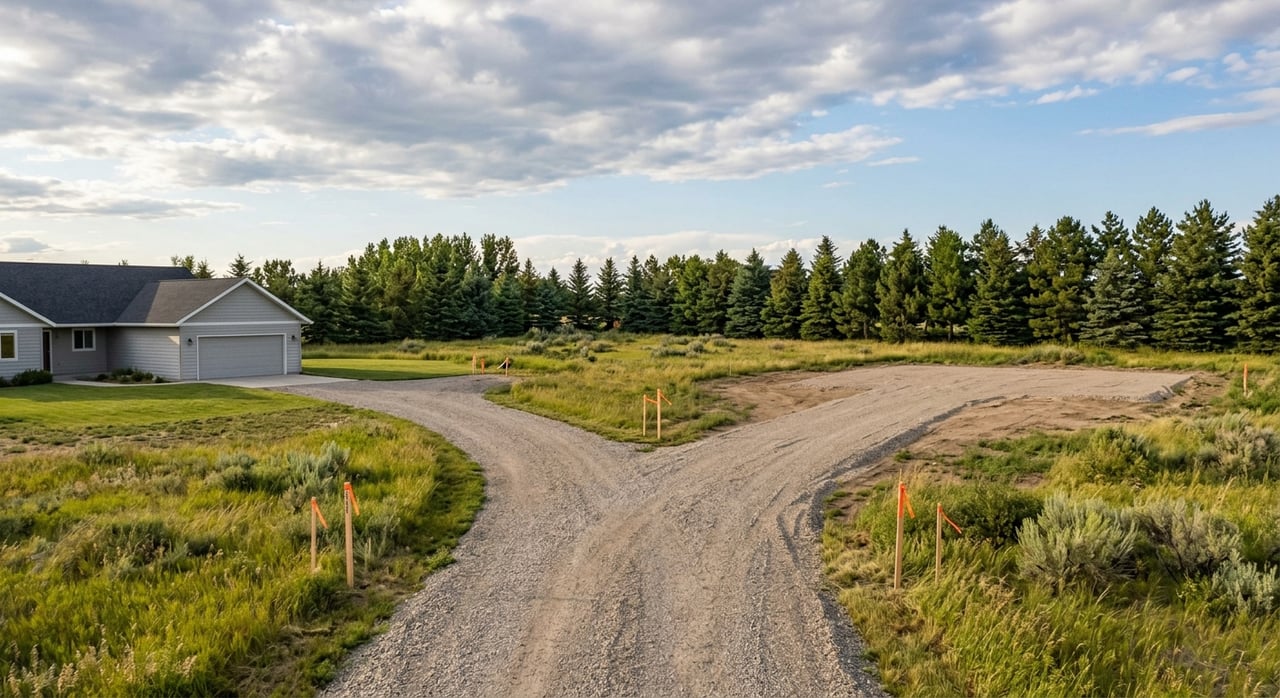
Thinking about splitting your Banner acreage before you sell? It sounds simple on the surface, but in unincorporated Sheridan County, that choice can affect your timeline, costs, buyer pool, and even whether the land can be divided the way you hope. If you want to make a smart, low-stress decision, it helps to understand what local rules actually require and when subdividing is worth the extra work. Let’s dive in.
Banner acreage sales: split or sell whole?
For many landowners near Banner, the real question is not whether subdivision is possible. It is whether subdivision will improve your outcome enough to justify the added complexity.
In Sheridan County, development proposals in unincorporated areas are reviewed in light of the county’s long-term planning goals. The county’s comprehensive planning framework emphasizes keeping a clear distinction between urban and rural areas while minimizing impacts on agricultural lands and open space. That means the best answer often depends on your parcel’s legal status, access, utility options, and how well a split fits the site itself.
What Wyoming and Sheridan County require
Subdivision rules apply before sale
Wyoming law gives county commissioners authority over subdivision in unincorporated areas. It also requires a subdivision permit before regulated subdivision land is sold, platted, or started as a subdivision.
That matters because dividing acreage is not just a private agreement between buyer and seller. If your plan creates a regulated subdivision, county review comes first.
Some land changes are treated differently
Not every change to a parcel is handled the same way. Wyoming law treats separately lawfully created parcels and boundary adjustments differently from a new subdivision.
The statute also gives different treatment to some agricultural dispositions, certain immediate-family transfers that meet the legal conditions, and some parcels of 35 acres or more when required easements and county provisions are satisfied. Even in those cases, the county may still require documentation to confirm status.
County review can be broad
Sheridan County’s zoning application checklist shows that county staff may review much more than lot lines. Early review can include steep slopes, landslide areas, stream setbacks, flood hazards, airport zones, septic permits, water and sewer permits, driveway access, subdivision status, and exempt-parcel status.
The county may also request a survey or plat from a licensed land surveyor, along with proof of ownership and proof of how the parcel was established. In other words, this is usually a development review process, not just a paperwork update.
When subdividing can help you sell
Smaller parcels may attract more buyers
One reason sellers consider subdivision is simple: smaller parcels can widen the buyer pool. Some lenders treat larger acreage, agricultural income, or other non-standard property features as harder to fit into standard conventional loan guidelines.
That does not mean larger tracts cannot sell. It does suggest that a smaller, cleaner parcel may appeal to more buyers and may fit more financing scenarios.
You may be able to separate value
A split can sometimes help you separate different parts of a property’s value. For example, you might carve out a homesite from excess acreage or divide buildable lots from pasture.
That can make sense when buyers are likely to value those pieces differently. It can also help if the remainder parcel still has strong utility and market appeal after the split.
Conservation design may offer a middle path
If your land qualifies, Sheridan County’s conservation design subdivision option may be worth exploring. This option is intended to preserve open character while allowing clustered residential lots in certain zoning districts, including A, RR, and UR.
The process requires a pre-application meeting, site analysis, site visit, concept plan, and final plat review. It also requires 70% of the gross parcel area to remain in conservation area, and the county waives final plat application review and lot fees for this option.
When keeping the acreage intact may be better
The process takes time and money
Subdividing is rarely the fastest route to market. The Sheridan County Conservation District reviews subdivision plats and says to allow at least 30 days for review, with up to 60 days allowed by statute.
There are also published county fees tied to subdivision activity. The land-use fee schedule lists fees such as a $550 base fee for a minor subdivision plus $50 per lot, and a $550 base fee for a major subdivision permit plus $50 per lot, along with separate parcel-division and replat fees.
Physical site issues can limit your options
The land itself may make a split harder, slower, or more expensive. County and state review may hinge on wastewater, water supply, steep slopes, landslide areas, flood hazards, and access.
If a new access point is needed onto a county-maintained road, Sheridan County requires a driveway permit for driveways or subdivision roads entering county roads. If a new domestic or stock well will be needed, the Wyoming State Engineer requires a groundwater permit before drilling or development begins.
County policy favors thoughtful rural development
Sheridan County’s planning goals matter here too. The county’s long-range planning documents emphasize preserving rural land patterns, minimizing intrusion on irrigated agricultural lands, and recognizing open-space priorities such as river corridors, wildlife habitat, and irrigated lands.
That does not mean subdivision is discouraged in every case. It does mean a split usually makes the most sense when the new lots clearly fit the parcel, the zoning district, and the county’s long-term land-use pattern.
Questions to answer before you decide
Before you spend money on surveys, plats, or applications, it helps to walk through a few practical questions.
Is your parcel already legally separate?
Start with the legal status of the property. If the land is already a separately lawfully created parcel, your options may look very different than if you are creating a new subdivision.
This is one of the first things to confirm with Sheridan County Public Works or Planning. It can shape the entire path forward.
What zoning and overlays apply?
Your zoning district and any county overlays can affect whether subdivision is feasible and what standards apply. The county’s own materials show that geometry, hazards, water, sewer, septic, and access issues may be reviewed early.
If you are considering conservation design, zoning matters even more because that option is available only in certain districts.
Will the added value exceed the added cost?
This is the core financial question. Compare the likely sale-price gain from smaller parcels against the cost of survey work, plats, legal help, access improvements, utility planning, septic work, and permit fees.
In many cases, subdivision only pays off if the finished lots meet real buyer demand and the remaining parcel keeps strong value.
Will the remainder still sell well?
When land is split, the unsold portion needs to stand on its own. Think about access, shape, utility potential, views, and overall usefulness after the division.
A poorly planned split can weaken the appeal of the remainder, even if the new parcel looks marketable by itself.
A practical decision framework for Banner sellers
If you own acreage near Banner, a clear decision often comes down to two paths.
Sell the land intact if the current buyer pool is already strong and the parcel’s size, layout, and use are part of its appeal. This route may be simpler when the property already matches what acreage buyers are looking for.
Consider subdivision only if the new lots clearly line up with likely demand and can be approved without creating avoidable issues with access, utilities, or the value of the remainder. In this area, that kind of discipline matters.
Best next steps before filing anything
A careful sequence can save you time and money. Before moving forward, confirm the parcel’s legal status with Sheridan County Public Works or Planning.
Next, bring in a licensed land surveyor if needed. After that, review the legal and financial implications with the appropriate professionals so you know what the split would really cost, how long it may take, and whether it supports your sale goals.
If you are weighing whether to subdivide before selling, the best strategy is usually the one that keeps your pricing, timing, and marketability aligned from the start. If you want help thinking through how buyers may view your Banner acreage in today’s Sheridan County market, reach out to Chad A Conley for clear, practical guidance.
FAQs
Should you subdivide acreage before selling in Banner, Wyoming?
- It depends on whether the split would clearly improve marketability enough to justify added time, cost, and county review.
Does Sheridan County require approval before acreage is subdivided?
- Yes. Wyoming law requires a subdivision permit before regulated subdivision land in unincorporated areas is sold, platted, or started as a subdivision.
Are boundary adjustments treated the same as a new subdivision in Sheridan County?
- No. Wyoming law treats separately lawfully created parcels and boundary adjustments differently from a new subdivision.
What does Sheridan County review during a subdivision process?
- County review may include slopes, landslide areas, stream setbacks, flood hazards, airport zones, septic permits, water and sewer permits, driveway access, subdivision status, and exempt-parcel status.
Can access and wells affect a Banner land split?
- Yes. New access onto a county-maintained road may require a driveway permit, and a new domestic or stock well requires a groundwater permit from the Wyoming State Engineer before drilling or development begins.
Is there a conservation-style subdivision option in Sheridan County?
- Yes. Sheridan County allows a conservation design option in certain districts, with a required review process and a rule that 70% of the gross parcel area remain in conservation area.
How long can subdivision review take in Sheridan County?
- The Sheridan County Conservation District says to allow at least 30 days for subdivision plat review, and statute allows up to 60 days.
What should Banner sellers do first before trying to subdivide land?
- Start by confirming the parcel’s legal status with Sheridan County Public Works or Planning, then involve a licensed surveyor and review legal and financial impacts with the appropriate professionals.